

New Horror Sampler Playlist
Checkout iconic tracks from your favorite horror flicks.
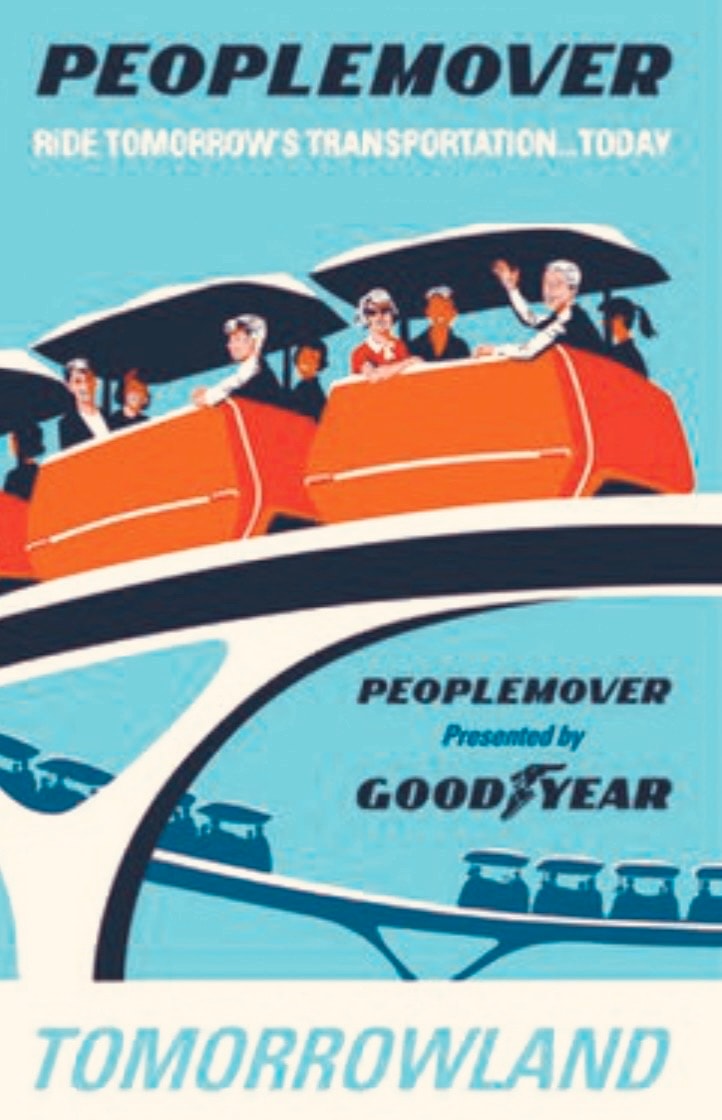
Before it disappeared, the Disneyland PeopleMover attraction carried millions of guests through Tomorrowland accompanied by a soundtrack of authentic vintage music from Ole Georg : Music (OGM) that will soon be released at DSPs for the very first time.
There are certain sounds that can take you somewhere before you even realize where you are going. For generations of Disneyland visitors, the PeopleMover was one of those places.
You would climb aboard in Tomorrowland, settle into one of the constantly moving vehicles and slowly rise above the park. Below you was Disneyland; around you was Tomorrowland, with its futuristic architecture, attractions and optimistic vision of what the world might look like someday.
And accompanying the ride was music: music that will soon be released on vinyl and online at all major streaming platforms for the very first time.
The music was instrumental, atmospheric and unmistakably of its time, the kind of music that could make a space feel larger, more modern, more sophisticated or simply more alive.
For those who rode the PeopleMover during its later years, some of that music came from Ole Georg Music (previously Capitol Media Music). That connection is an important, and largely forgotten, part of the history of both Disneyland and Ole Georg Music.
A Different Kind of Disneyland Experience
The PeopleMover opened in Tomorrowland on July 2, 1967. Conceived as a futuristic transportation system, it was unlike almost anything else in the park. Rather than moving guests through a traditional ride narrative, it offered a continuously moving view of Tomorrowland itself.
The attraction passed through buildings and above other attractions, giving passengers a perspective of Disneyland that couldn't be experienced anywhere else.It was transportation, sightseeing and entertainment all at once. The PeopleMover remained in operation until August 21, 1995. For a detailed history of the attraction, see the PeopleMover (Disneyland) article on Wikipedia.
Historical documentation of the attraction identifies Ole Georg as the composer. When Ole Georg left Capitol Records, he brought the music and the rights with him, and those recordings and copyrights are now part of the Ole Georg Music archive.
For Tomorrowland, the PeopleMover was designed to represent the future, and Ole Georg had created an entire musical language for imagining what that future might sound like. The PeopleMover soundtrack created a musical backdrop that was heard repeatedly as guests traveled through Tomorrowland. Historical documentation of the PeopleMover's onboard music includes numerous recordings such as "It's Sprinkling," "Vast Resources," "Decisions," "Today's Action #10," "March" and "Window Shopping."
Soon you will be able to explore the documented PeopleMover music, coming soon to Spotify.
The Sound of a Lost Tomorrowland
Ask someone who remembers the PeopleMover and they will often describe the same kinds of things: the gentle movement, the view of Tomorrowland, the feeling of being above the park, the tunnels and the futuristic landscape. Music is often part of those memories, even when people don't know what they were hearing. That is the nature of environmental music. It becomes attached to a place. The PeopleMover was not a concert. It wasn't a movie with a soundtrack released on an album. The music existed within the experience itself.
It helped create the atmosphere of Tomorrowland. That makes these recordings particularly interesting today. We tend to think of historic music in terms of records, albums, films and television programs. But production music often lived in a different world. It could become part of the fabric of a place without ever receiving public recognition.
The PeopleMover is a wonderful example.
More Than Nostalgia
It is tempting to look back at the PeopleMover simply as a piece of Disneyland nostalgia. But its music tells a larger story. It connects Disneyland with the Los Angeles recording industry, Capitol Records, Hollywood composers and the enormous production-music business that flourished during the second half of the twentieth century. It also shows how music can become part of architecture. The PeopleMover's track, Tomorrowland's buildings, the moving vehicles, the narration and the music all worked together to create a particular vision of the future. That vision is gone now. The PeopleMover closed in 1995, but its physical track still stands as one of the most recognizable remnants of an earlier Tomorrowland. And the music survives.
The Original Sound of Tomorrowland
At Ole Georg Music, we believe these recordings deserve to be understood in their historical context. They are not simply anonymous background tracks. They are original recordings created by composers, musicians and producers working at the highest level of the Hollywood recording industry. They are part of the musical history of television, film and American popular culture. And in the case of the PeopleMover, they are also part of the history of Disneyland.
Ole Georg Music owns the copyrights, the music recordings and the publishing from the Ole Georg catalog represented in this archive, preserving both the creative work and the history surrounding it. For researchers, music supervisors, filmmakers, documentary producers, collectors and anyone interested in the sound of this remarkable period, the archive offers a rare opportunity to work with the original recordings rather than modern recreations.
The PeopleMover Lives On
The PeopleMover may have disappeared from Disneyland, but the memories and the music haven't. For some people, it is the view from above Tomorrowland. For others, it is the sound of the vehicle moving through the tunnels. For many, it is simply the feeling of being there with a parent, a grandparent, a friend or a child. And somewhere inside those memories is often the music. That is what makes preserving this history worthwhile. A piece of music can outlive the place where it was heard. It can sit quietly in an archive for decades and then, the moment it is heard again, bring an entire world back.
For the PeopleMover, that world was Tomorrowland. And for a generation of Disneyland visitors, this was what the future sounded like.
Explore More
Read more about Disneyland's vintage music history in our feature, The Original Sonic DNA of Disneyland.
For the history of the attraction itself, see the PeopleMover (Disneyland) article on Wikipedia.
For licensing, archival inquiries and information about the Ole Georg Music catalog, contact licensing@olegeorgmusic.com
More News
The Original Sonic DNA of Disneyland
Ole Georg Inducted into Hall of Fame1

The Sound of Chaos: Ole Georg Music in the World of Ren & Stimpy
Beyond the Cliché: OGM'S Authentic DNA of Latin Pop Culture
Disneyland PeopleMover Music: The Lost Sound of Tomorrowland
Capitol Records Media Music, HI-Q Series & the Legacy of Production Music That Continues With OGM
Poker Face: The Sound of Modern Noir
Sample Culture, Hi-Q Series & Capitol Media Music: The Archive That Shaped Hip Hop


CONTACT
818-208-7511licensing@olegeorgmusic.com
OFFICE
OGM, Inc. / Group Pro, Inc.17404 Ventura BlvdEncino, CA 91316
New Horror Sampler Playlist
Checkout iconic tracks from your favorite horror flicks.
Before it disappeared, the Disneyland PeopleMover attraction carried millions of guests through Tomorrowland accompanied by a soundtrack of authentic vintage music from Ole Georg : Music (OGM) that will soon be released at DSPs for the very first time.
There are certain sounds that can take you somewhere before you even realize where you are going. For generations of Disneyland visitors, the PeopleMover was one of those places.
You would climb aboard in Tomorrowland, settle into one of the constantly moving vehicles and slowly rise above the park. Below you was Disneyland; around you was Tomorrowland, with its futuristic architecture, attractions and optimistic vision of what the world might look like someday.
And accompanying the ride was music: music that will soon be released on vinyl and online at all major streaming platforms for the very first time.
The music was instrumental, atmospheric and unmistakably of its time, the kind of music that could make a space feel larger, more modern, more sophisticated or simply more alive.
For those who rode the PeopleMover during its later years, some of that music came from Ole Georg Music (previously Capitol Media Music). That connection is an important, and largely forgotten, part of the history of both Disneyland and Ole Georg Music.
A Different Kind of Disneyland Experience
The PeopleMover opened in Tomorrowland on July 2, 1967. Conceived as a futuristic transportation system, it was unlike almost anything else in the park. Rather than moving guests through a traditional ride narrative, it offered a continuously moving view of Tomorrowland itself.
The attraction passed through buildings and above other attractions, giving passengers a perspective of Disneyland that couldn't be experienced anywhere else.It was transportation, sightseeing and entertainment all at once. The PeopleMover remained in operation until August 21, 1995. For a detailed history of the attraction, see the PeopleMover (Disneyland) article on Wikipedia.
Historical documentation of the attraction identifies Ole Georg as the composer. When Ole Georg left Capitol Records, he brought the music and the rights with him, and those recordings and copyrights are now part of the Ole Georg Music archive.
For Tomorrowland, the PeopleMover was designed to represent the future, and Ole Georg had created an entire musical language for imagining what that future might sound like. The PeopleMover soundtrack created a musical backdrop that was heard repeatedly as guests traveled through Tomorrowland. Historical documentation of the PeopleMover's onboard music includes numerous recordings such as "It's Sprinkling," "Vast Resources," "Decisions," "Today's Action #10," "March" and "Window Shopping."
Soon you will be able to explore the documented PeopleMover music, coming soon to Spotify.
The Sound of a Lost Tomorrowland
Ask someone who remembers the PeopleMover and they will often describe the same kinds of things: the gentle movement, the view of Tomorrowland, the feeling of being above the park, the tunnels and the futuristic landscape. Music is often part of those memories, even when people don't know what they were hearing. That is the nature of environmental music. It becomes attached to a place. The PeopleMover was not a concert. It wasn't a movie with a soundtrack released on an album. The music existed within the experience itself.
It helped create the atmosphere of Tomorrowland. That makes these recordings particularly interesting today. We tend to think of historic music in terms of records, albums, films and television programs. But production music often lived in a different world. It could become part of the fabric of a place without ever receiving public recognition.
The PeopleMover is a wonderful example.
More Than Nostalgia
It is tempting to look back at the PeopleMover simply as a piece of Disneyland nostalgia. But its music tells a larger story. It connects Disneyland with the Los Angeles recording industry, Capitol Records, Hollywood composers and the enormous production-music business that flourished during the second half of the twentieth century. It also shows how music can become part of architecture. The PeopleMover's track, Tomorrowland's buildings, the moving vehicles, the narration and the music all worked together to create a particular vision of the future. That vision is gone now. The PeopleMover closed in 1995, but its physical track still stands as one of the most recognizable remnants of an earlier Tomorrowland. And the music survives.
The Original Sound of Tomorrowland
At Ole Georg Music, we believe these recordings deserve to be understood in their historical context. They are not simply anonymous background tracks. They are original recordings created by composers, musicians and producers working at the highest level of the Hollywood recording industry. They are part of the musical history of television, film and American popular culture. And in the case of the PeopleMover, they are also part of the history of Disneyland.
Ole Georg Music owns the copyrights, the music recordings and the publishing from the Ole Georg catalog represented in this archive, preserving both the creative work and the history surrounding it. For researchers, music supervisors, filmmakers, documentary producers, collectors and anyone interested in the sound of this remarkable period, the archive offers a rare opportunity to work with the original recordings rather than modern recreations.
The PeopleMover Lives On
The PeopleMover may have disappeared from Disneyland, but the memories and the music haven't. For some people, it is the view from above Tomorrowland. For others, it is the sound of the vehicle moving through the tunnels. For many, it is simply the feeling of being there with a parent, a grandparent, a friend or a child. And somewhere inside those memories is often the music. That is what makes preserving this history worthwhile. A piece of music can outlive the place where it was heard. It can sit quietly in an archive for decades and then, the moment it is heard again, bring an entire world back.
For the PeopleMover, that world was Tomorrowland. And for a generation of Disneyland visitors, this was what the future sounded like.
Explore More
Read more about Disneyland's vintage music history in our feature, The Original Sonic DNA of Disneyland.
For the history of the attraction itself, see the PeopleMover (Disneyland) article on Wikipedia.
For licensing, archival inquiries and information about the Ole Georg Music catalog, contact licensing@olegeorgmusic.com
More News
The Original Sonic DNA of Disneyland
Ole Georg Inducted into Hall of Fame1
The Sound of Chaos: Ole Georg Music in the World of Ren & Stimpy
Beyond the Cliché: OGM'S Authentic DNA of Latin Pop Culture
Disneyland PeopleMover Music: The Lost Sound of Tomorrowland
Capitol Records Media Music, HI-Q Series & the Legacy of Production Music That Continues With OGM
Poker Face: The Sound of Modern Noir
Sample Culture, Hi-Q Series & Capitol Media Music: The Archive That Shaped Hip Hop
CONTACT
818-208-7511licensing@olegeorgmusic.com
OFFICE
OGM, Inc. / Group Pro, Inc.17404 Ventura BlvdEncino, CA 91316
Disneyland PeopleMover Music: The Lost Sound of Tomorrowland
Music from Vintage Disneyland Attractions
Before it disappeared, the Disneyland PeopleMover attraction carried millions of guests through Tomorrowland accompanied by a soundtrack of authentic vintage music from Ole Georg : Music (OGM) that will soon be released at DSPs for the very first time.
There are certain sounds that can take you somewhere before you even realize where you are going. For generations of Disneyland visitors, the PeopleMover was one of those places.
You would climb aboard in Tomorrowland, settle into one of the constantly moving vehicles and slowly rise above the park. Below you was Disneyland; around you was Tomorrowland, with its futuristic architecture, attractions and optimistic vision of what the world might look like someday.
And accompanying the ride was music: music that will soon be released on vinyl and online at all major streaming platforms for the very first time.
The music was instrumental, atmospheric and unmistakably of its time, the kind of music that could make a space feel larger, more modern, more sophisticated or simply more alive.
For those who rode the PeopleMover during its later years, some of that music came from Ole Georg Music (previously Capitol Media Music). That connection is an important, and largely forgotten, part of the history of both Disneyland and Ole Georg Music.
A Different Kind of Disneyland Experience
The PeopleMover opened in Tomorrowland on July 2, 1967. Conceived as a futuristic transportation system, it was unlike almost anything else in the park. Rather than moving guests through a traditional ride narrative, it offered a continuously moving view of Tomorrowland itself.
The attraction passed through buildings and above other attractions, giving passengers a perspective of Disneyland that couldn't be experienced anywhere else.It was transportation, sightseeing and entertainment all at once. The PeopleMover remained in operation until August 21, 1995. For a detailed history of the attraction, see the PeopleMover (Disneyland) article on Wikipedia.
Historical documentation of the attraction identifies Ole Georg as the composer. When Ole Georg left Capitol Records, he brought the music and the rights with him, and those recordings and copyrights are now part of the Ole Georg Music archive.
For Tomorrowland, the PeopleMover was designed to represent the future, and Ole Georg had created an entire musical language for imagining what that future might sound like. The PeopleMover soundtrack created a musical backdrop that was heard repeatedly as guests traveled through Tomorrowland. Historical documentation of the PeopleMover's onboard music includes numerous recordings such as "It's Sprinkling," "Vast Resources," "Decisions," "Today's Action #10," "March" and "Window Shopping."
Soon you will be able to explore the documented PeopleMover music, coming soon to Spotify.
The Sound of a Lost Tomorrowland
Ask someone who remembers the PeopleMover and they will often describe the same kinds of things: the gentle movement, the view of Tomorrowland, the feeling of being above the park, the tunnels and the futuristic landscape. Music is often part of those memories, even when people don't know what they were hearing. That is the nature of environmental music. It becomes attached to a place. The PeopleMover was not a concert. It wasn't a movie with a soundtrack released on an album. The music existed within the experience itself.
It helped create the atmosphere of Tomorrowland. That makes these recordings particularly interesting today. We tend to think of historic music in terms of records, albums, films and television programs. But production music often lived in a different world. It could become part of the fabric of a place without ever receiving public recognition.
The PeopleMover is a wonderful example.
More Than Nostalgia
It is tempting to look back at the PeopleMover simply as a piece of Disneyland nostalgia. But its music tells a larger story. It connects Disneyland with the Los Angeles recording industry, Capitol Records, Hollywood composers and the enormous production-music business that flourished during the second half of the twentieth century. It also shows how music can become part of architecture. The PeopleMover's track, Tomorrowland's buildings, the moving vehicles, the narration and the music all worked together to create a particular vision of the future. That vision is gone now. The PeopleMover closed in 1995, but its physical track still stands as one of the most recognizable remnants of an earlier Tomorrowland. And the music survives.
The Original Sound of Tomorrowland
At Ole Georg Music, we believe these recordings deserve to be understood in their historical context. They are not simply anonymous background tracks. They are original recordings created by composers, musicians and producers working at the highest level of the Hollywood recording industry. They are part of the musical history of television, film and American popular culture. And in the case of the PeopleMover, they are also part of the history of Disneyland.
Ole Georg Music owns the copyrights, the music recordings and the publishing from the Ole Georg catalog represented in this archive, preserving both the creative work and the history surrounding it. For researchers, music supervisors, filmmakers, documentary producers, collectors and anyone interested in the sound of this remarkable period, the archive offers a rare opportunity to work with the original recordings rather than modern recreations.
The PeopleMover Lives On
The PeopleMover may have disappeared from Disneyland, but the memories and the music haven't. For some people, it is the view from above Tomorrowland. For others, it is the sound of the vehicle moving through the tunnels. For many, it is simply the feeling of being there with a parent, a grandparent, a friend or a child. And somewhere inside those memories is often the music. That is what makes preserving this history worthwhile. A piece of music can outlive the place where it was heard. It can sit quietly in an archive for decades and then, the moment it is heard again, bring an entire world back.
For the PeopleMover, that world was Tomorrowland. And for a generation of Disneyland visitors, this was what the future sounded like.
Explore More
Read more about Disneyland's vintage music history in our feature, The Original Sonic DNA of Disneyland.
For the history of the attraction itself, see the PeopleMover (Disneyland) article on Wikipedia.
For licensing, archival inquiries and information about the Ole Georg Music catalog, contact licensing@olegeorgmusic.com
More News
The Original Sonic DNA of Disneyland
Ole Georg Inducted into Hall of Fame1
The Sound of Chaos: Ole Georg Music in the World of Ren & Stimpy
Beyond the Cliché: OGM'S Authentic DNA of Latin Pop Culture
Disneyland PeopleMover Music: The Lost Sound of Tomorrowland
Capitol Records Media Music, HI-Q Series & the Legacy of Production Music That Continues With OGM
Poker Face: The Sound of Modern Noir
Sample Culture, Hi-Q Series & Capitol Media Music: The Archive That Shaped Hip Hop
CONTACT
818-208-7511licensing@olegeorgmusic.com
OFFICE
OGM, Inc. / Group Pro, Inc.17404 Ventura BlvdEncino, CA 91316